
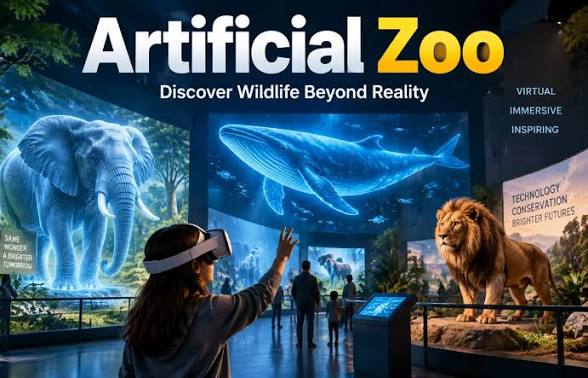

Imagine visiting a place where you can see realistic digital animals, robotic creatures, or virtual wildlife instead of live animals. This combination of technology, education, and wildlife experiences is becoming an interesting concept. An artificial zoo uses modern technology to recreate animal experiences in digital, robotic, virtual, or interactive forms.
Unlike traditional zoos, where visitors observe living animals in enclosures, technology-based wildlife attractions can use artificial intelligence (AI), virtual reality (VR), augmented reality (AR), robotics, and interactive displays. This guide explains what an artificial zoo is, how it works, its benefits, limitations, and possible future applications.
What Is an Artificial Zoo?
An artificial zoo is a technology-based environment where animals are represented through artificial, digital, robotic, or virtual systems instead of relying entirely on live animals.
It can take several forms:
- Robotic animals: Mechanical creatures designed to imitate animal movements and behaviors.
- Virtual animals: Computer-generated animals displayed through screens, apps, or VR systems.
- Augmented reality animals: Digital animals that appear in real-world surroundings through smartphones or AR glasses.
- Interactive installations: Systems that respond to visitors through sensors, movement, touch, or sound.
- AI-powered simulations: Software that can simulate certain aspects of animal behavior.
The goal is not necessarily to replace traditional wildlife experiences. Instead, these systems can provide additional ways to learn about animals, ecosystems, and conservation.
Real-World Examples and Experiences
Technology-based wildlife experiences can be created in museums, science centers, educational facilities, and entertainment attractions.
For example, a visitor could wear a VR headset and enter a simulated rainforest. Inside the virtual environment, they could observe digital birds, reptiles, and mammals while learning about their habitats.
Another example could be a robotic elephant. Using motors, sensors, and programmed movements, the model could move its trunk, respond to nearby visitors, and produce realistic sounds.
Schools could also create a smaller version of an artificial zoo. Students might use tablets to select different animals and view their three-dimensional models through augmented reality.
These experiences can be especially useful for people who cannot easily travel to wildlife reserves or remote natural habitats.
How Does an Artificial Zoo Work?
An artificial zoo can combine several technologies. The exact setup depends on its purpose, audience, and budget.
1. Digital Modeling
The process often begins with creating detailed 3D animal models. Designers recreate an animal’s appearance, body structure, colors, size, and movements.
2. Programming and AI
Software controls how digital or robotic animals behave. For example, a virtual bird can change its flight direction, while a robotic animal can respond to movement detected by nearby sensors.
3. Sensors
Sensors can detect movement, touch, sound, distance, or other inputs. When a visitor approaches a robotic animal, the system can trigger a programmed response.
4. Display Technology
Large screens, projectors, VR headsets, AR devices, and physical robotic structures can all be used to create the final experience.
5. Sound and Environment
Sound effects, lighting, projections, and environmental effects can make the experience more immersive. A rainforest simulation, for instance, could include digital vegetation, bird calls, rainfall, and changing lighting.
Benefits of Artificial Zoo Technology
An artificial zoo can provide several benefits, particularly in education, accessibility, and conservation awareness.
Animal Welfare
Robotic and digital animals do not require food, medical treatment, or living enclosures in the same way as real animals. This can allow educational attractions to reduce their dependence on live-animal displays.
Better Education
Students can interact with animal models instead of simply looking at photographs. For example, a virtual whale could be examined from different angles while students learn about its anatomy and behavior.
Safer Learning
Some animals are dangerous or difficult to observe closely in real life. Simulated environments can allow visitors to study these species without physically entering their habitats.
Greater Accessibility
Virtual wildlife experiences can be useful for people who cannot visit traditional zoos or wildlife reserves. Schools can also bring interactive animal experiences directly into classrooms.
Conservation Awareness
Technology can help explain threats facing endangered species. Visitors can explore simulated habitats and learn how pollution, habitat destruction, and environmental changes can affect wildlife.
Challenges and Limitations
Although an artificial zoo offers many possibilities, it also has limitations.
The first challenge is realism. Even advanced robots and computer graphics cannot perfectly reproduce every aspect of a living animal’s natural behavior.
Cost is another consideration. High-quality robots, VR systems, sensors, software, and interactive displays can require significant investment.
Maintenance is also important. Broken sensors, software problems, damaged displays, or mechanical failures can affect the visitor experience.
Educational accuracy is another major factor. If animal behavior or scientific information is represented incorrectly, visitors may develop misconceptions. For this reason, zoologists, educators, designers, and technology specialists should work together when developing these experiences.
How to Create an Artificial Zoo
Schools, museums, and businesses interested in developing an artificial zoo can follow a simple step-by-step process.
Step 1: Define the Purpose
First, decide what the project is designed to achieve:
- Education
- Entertainment
- Wildlife awareness
- Museum exhibitions
- Scientific demonstrations
Step 2: Select the Animals
Start with a manageable number of species. For example, a project could focus specifically on African wildlife, marine animals, or endangered species.
Step 3: Choose the Technology
Select the technology according to the budget and target audience. Options may include AR, VR, robotics, projection mapping, interactive screens, or a combination of several systems.
Step 4: Develop Educational Content
Create accurate information about each animal, including its habitat, diet, behavior, ecosystem role, and conservation status.
Step 5: Test the Experience
Before launching, test the system with real users. Make sure the controls are easy to understand, the information is accurate, and the technology operates reliably.
The Future of Artificial Zoo Experiences
The future of the artificial zoo could become increasingly interactive as AI, robotics, AR, and VR technology continue to develop.
Imagine a student entering a virtual Amazon rainforest. They could observe a digital jaguar, explore its habitat, learn about its prey, and discover how changes in the ecosystem affect the species.
Future systems could also offer personalized learning. Beginners might receive simple animal facts, while advanced students could explore food chains, ecosystems, biodiversity, and conservation data.
Robotics may also create more responsive physical animal models. Advanced sensors and AI systems could allow robotic creatures to react differently depending on visitor movements and interactions.
Where Can This Technology Be Used?
An artificial zoo can be useful in schools, museums, science centers, educational exhibitions, theme parks, and technology-focused attractions.
In schools, it can make science lessons more interactive. Museums can use it to create immersive exhibits about endangered species. Theme parks can combine entertainment with educational information.
However, technology should not be considered a complete replacement for real wildlife conservation. Natural ecosystems, protected habitats, wildlife research, and conservation programs remain essential.
Conclusion
An artificial zoo can provide a modern and interactive approach to wildlife education. By combining digital models, robotics, AR, VR, sensors, and AI, these experiences can help people explore animals and ecosystems in new ways.
The biggest advantage is the ability to make learning more engaging without depending entirely on live-animal displays. When scientific accuracy, responsible design, and education are prioritized, technology-based wildlife experiences can offer valuable learning opportunities for students and visitors while supporting greater awareness of wildlife and conservation.


Pingback: Gayfirir: Meaning, Origin, Uses, and Online Context - EuroBuzz